

How Boston Brain Center Improved Performance by More Than 25% Through Strategic Consulting
At Boston Brain Center, our mission has always been centered on providing exceptional neurological rehabilitation while continually looking for ways to improve the experience and outcomes for the people we serve.
As an organization grows, however, it becomes increasingly important to look beyond clinical services alone and examine how the entire business operates.
How efficiently are we using our available resources?
How can we increase patient throughput without compromising the quality of care?
Are our existing processes still the most effective way to operate?
And perhaps most importantly: Are we doing things the best way simply because that is how we have always done them?
Those questions led us to work with Tamelos, a consulting firm focused on business performance, operational efficiency and sustainable improvement.
The engagement challenged us to look at our organization from an entirely different perspective.
Challenging the Way We Had Always Done Things
One of the most valuable aspects of working with Tamelos was their willingness to challenge established assumptions.
Instead of starting with the premise that our existing processes were correct, Tamelos started by asking why we did things the way we did.
That sounds simple, but it can be surprisingly difficult for an established organization.
Over time, processes become familiar. Employees become accustomed to them. Systems are built around them. And eventually, the process itself can become invisible.
Tamelos helped us step back and examine our operations objectively.
Scheduling, capacity, resource utilization, patient throughput, workflows, administrative processes and financial performance were all considered as interconnected parts of the organization.
The result was a much clearer understanding of where opportunities existed to improve efficiency and performance.
Improving Patient Throughput and Operational Efficiency
For a neurological rehabilitation organization such as Boston Brain Center, operational efficiency is particularly important.
Our resources are specialized, and our patients require individualized care. Increasing throughput therefore cannot simply mean seeing more patients. It requires making intelligent use of available clinical resources while maintaining the quality and personalized nature of rehabilitation.
This was one of the areas where Tamelos provided valuable insight.
By examining how resources were scheduled and utilized, and by challenging existing workflows, we were able to identify opportunities to improve how our capacity was used.
The goal was not simply to work harder.
It was to work smarter.
Improving processes, reducing inefficiencies and making better use of available capacity allowed us to increase throughput while creating a more efficient overall operation.
Making Better Use of Advanced Rehabilitation Technology
Boston Brain Center is also distinguished by its use of advanced rehabilitation technology.
One of our flagship technologies is the Lokomat Pro, an advanced robotic gait-training system used in neurological rehabilitation.
The Lokomat combines robotic leg guidance with a treadmill and dynamic body-weight support, allowing therapists to provide controlled and repetitive gait training that can be adjusted to the needs and abilities of individual patients.
For us, the value of a sophisticated rehabilitation system is not simply the technology itself. It is also how effectively that technology can be incorporated into the overall patient journey and operational workflow.
Maximizing the effective use of specialized technology requires careful consideration of scheduling, therapist resources, patient demand, treatment duration and available capacity.
This made the operational analysis particularly valuable.
The work with Tamelos encouraged us to look not only at what our technology could do, but at how we could structure our organization to make the best possible use of the resources we already had.
You can learn more about our Lokomat therapy and robotic gait-training program.
Looking at Financial Performance Differently
Another important part of the engagement was understanding the connection between operational decisions and financial performance.
In healthcare and rehabilitation, financial performance is not simply about generating more revenue.
A sustainable organization needs to understand how resources are being utilized, where capacity exists, which processes create unnecessary costs, and how operational decisions affect the overall economics of the business.
Tamelos brought an outside perspective to these questions.
Rather than focusing on individual financial figures in isolation, the analysis considered the relationship between operations, resources, throughput and financial performance.
That broader perspective helped us identify opportunities that were not immediately obvious when looking at individual departments or processes independently.
The Result: More Than 25% Performance Improvement
The work ultimately contributed to more than 25% improvement in overall performance.
For Boston Brain Center, this was significant.
The improvement was not the result of one single change. Instead, it came from systematically examining the organization and identifying multiple opportunities to improve the way we operated.
The engagement helped us:
- Improve operational efficiency
- Increase patient throughput
- Make better use of available capacity
- Examine resource utilization
- Identify opportunities for improved financial performance
- Challenge established workflows
- Take a more analytical approach to business decisions
- Create a stronger foundation for continued growth
Perhaps most importantly, the process changed the way we think about continuous improvement.
What We Learned From Tamelos
One of the most important lessons was that successful organizations cannot afford to become too comfortable with their existing processes.
Even when something appears to be working, there may be a significantly better way of doing it.
An external perspective can be extremely valuable because an outside consultant does not have the same attachment to existing processes and assumptions.
Tamelos was willing to ask difficult questions.
Why is this done this way?
Does this process actually add value?
Could this be done differently?
What is preventing us from increasing throughput?
Are we making the best possible use of our existing resources?
Those questions forced us to examine parts of our organization that we might otherwise have taken for granted.
A Valuable Consulting Partnership
From my perspective as CEO, one of the most valuable aspects of working with Tamelos was that they did not approach the project as a theoretical consulting exercise.
They wanted to understand how our organization actually worked.
They looked at the details, challenged assumptions and worked with us to identify practical improvements.
“Tamelos gave us a completely different perspective on our organization. They were willing to challenge the way we had always done things and ask the questions that sometimes need to be asked from outside the organization.
What I appreciated most was that they didn’t simply identify problems. They worked with us to understand the underlying issues and find practical ways to improve performance.
The resulting improvements in throughput and overall performance made a meaningful difference to Boston Brain Center. Working with Tamelos helped us see opportunities that we might otherwise have overlooked, and we are very grateful for their partnership.”
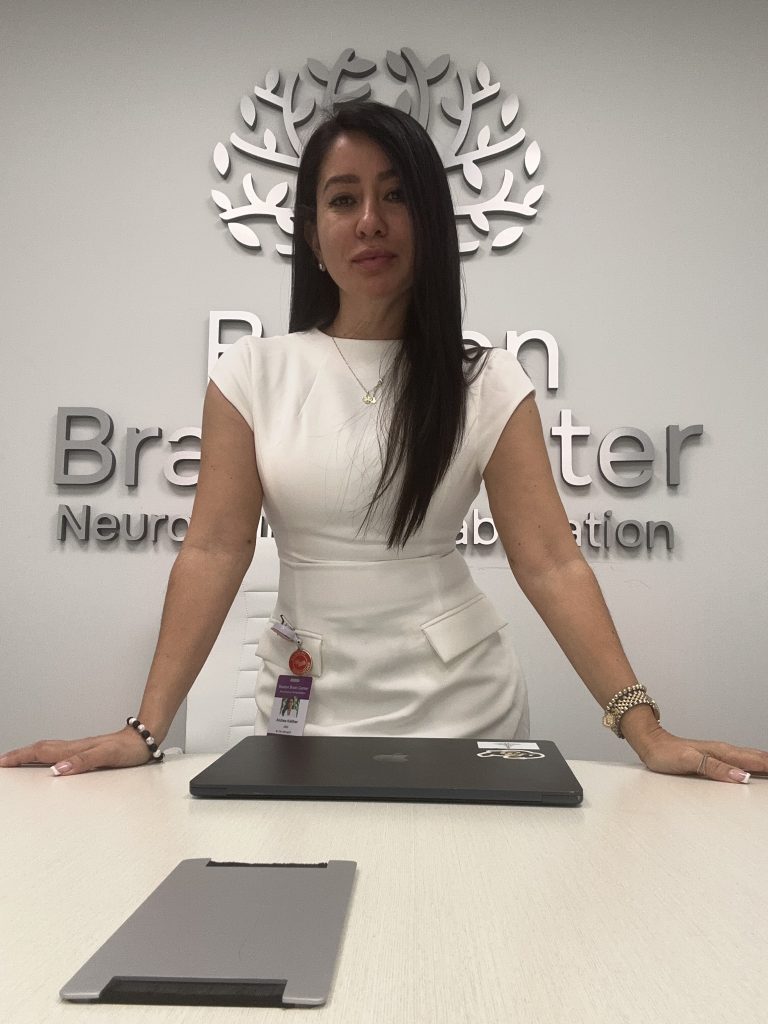
— Andrea C. Kelliher, CEO, Boston Brain Center
Continuing to Improve
The more than 25% improvement achieved through the engagement is an important milestone, but we don’t view it as the end of the process.
Continuous improvement means continuing to question, measure and refine the way an organization operates.
Our patients remain at the center of everything we do. That means looking for ways to improve our clinical services, our use of technology, our operational processes and the overall patient experience.
Working with Tamelos reinforced the importance of taking a step back from the day-to-day operation and periodically asking whether there is a better way.
Sometimes the answer is a small adjustment.
Sometimes it requires a significant change.
But the willingness to ask the question is what creates the opportunity.
Boston Brain Center and Tamelos
We are pleased to share our experience because we believe that the principles we learned through this engagement extend beyond our organization.
Businesses and healthcare organizations can become constrained by processes that have simply become familiar. An objective examination of those processes can reveal opportunities for improved efficiency, greater throughput and stronger financial performance.
Tamelos brought that outside perspective to Boston Brain Center and helped us challenge assumptions, rethink processes and identify opportunities for sustainable improvement.
Tamelos has also published a detailed account of the engagement, including its approach to challenging established processes and the resulting performance improvements. You can read the full Boston Brain Center performance improvement case study on the Tamelos website.
For organizations interested in learning more about Tamelos and its approach to business performance improvement and operational consulting, visit Tamelos.
At Boston Brain Center, we remain committed to continuous improvement — for our patients, our team and the organization as a whole.



No comment