
Acupuncture Therapy at Boston Brain Center
At Boston Brain Center, we understand that every patient’s health journey is different. Our approach focuses on personalized, whole-person care that considers physical comfort, emotional well-being, neurological health, and individual treatment goals. Acupuncture therapy is one of the services available at Boston Brain Center and may be considered as part of a broader, individualized care plan.
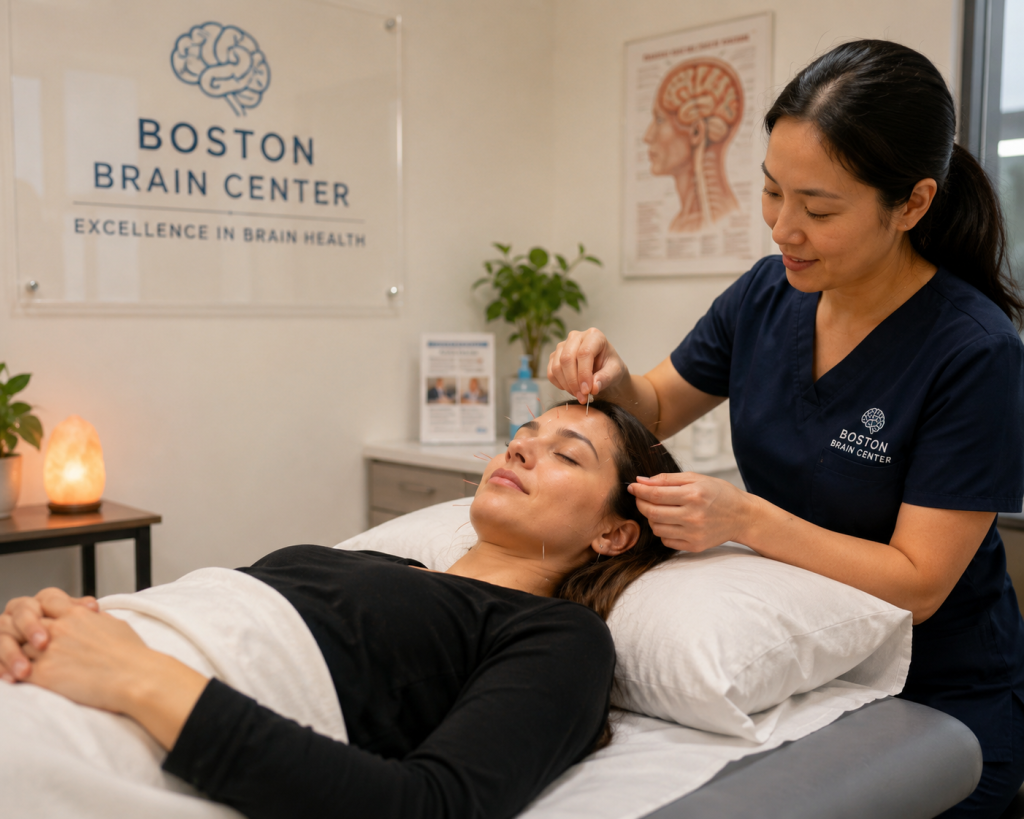
What Is Acupuncture?
Acupuncture is a therapeutic practice that involves inserting very thin needles into carefully selected points on the body. It originated as part of traditional Chinese medicine and is now used throughout the world as a complementary approach to health care. Some forms of acupuncture involve gentle manual stimulation of the needles, while others may use a mild electrical current.
Researchers are continuing to study exactly how acupuncture works. Current evidence suggests that it may affect nervous-system activity and the tissues surrounding the areas where needles are inserted. The overall experience of receiving care, including the therapeutic environment and the patient-provider relationship, may also contribute to how a person responds to treatment.
What Are the Potential Benefits of Acupuncture?
Acupuncture is most commonly used in the United States to help manage pain. Research suggests that it may be helpful for certain conditions, including back or neck pain, knee pain associated with osteoarthritis, postoperative pain, and some types of headaches. However, the strength of the evidence varies by condition, and each patient may respond differently.
Potential goals of acupuncture therapy may include:
- Helping manage certain types of pain
- Reducing muscle tension or physical discomfort
- Supporting relaxation and overall well-being
- Complementing an existing rehabilitation or medical care plan
- Providing a non-drug option for appropriate patients
Acupuncture is not intended to replace necessary medical care, physical therapy, medication, or other treatments recommended by a patient’s healthcare providers. Instead, it may be used as a complementary service when it is appropriate for the patient’s symptoms, medical history, and goals. The National Center for Complementary and Integrative Health recommends discussing acupuncture and other complementary approaches with your healthcare team.
Acupuncture and Neurological Rehabilitation
Patients participating in neurological rehabilitation may also experience pain, stiffness, headaches, muscle discomfort, or other symptoms that affect their comfort and daily activities. When clinically appropriate, acupuncture may be considered alongside rehabilitation services as part of a coordinated approach to care.
Boston Brain Center provides personalized neurological and cognitive rehabilitation through a multidisciplinary team. The center’s broader services include physical therapy, occupational therapy, speech therapy, psychiatric care, neuropsychological evaluation, and advanced rehabilitation technologies.
Acupuncture does not directly replace these therapies. Rather, it may offer an additional option for supporting comfort and well-being while the patient continues working toward functional rehabilitation goals.
What Can Patients Expect?
An acupuncture visit generally begins with a discussion of the patient’s symptoms, medical history, medications, concerns, and treatment goals. This information helps determine whether acupuncture is appropriate and which areas of the body may be addressed.
During treatment, hair-thin needles are gently placed at selected points. Most people report little discomfort when the needles are inserted, although some may notice mild pressure, tingling, warmth, or an aching sensation. Some patients describe feeling relaxed during or after a session.
The number and frequency of treatments will depend on the patient’s condition, response, and individual goals. Benefits cannot be guaranteed, and progress may vary from person to person.
Is Acupuncture Safe?
Relatively few complications from acupuncture have been reported when it is performed properly. However, serious problems can occur when treatment is delivered incorrectly or nonsterile needles are used. The U.S. Food and Drug Administration requires acupuncture needles to be sterile and labeled for single use.
Before receiving acupuncture, patients should share relevant information about their health, including medications, pregnancy, bleeding concerns, infection risk, implanted medical devices, and other medical conditions. Patients should also continue seeing their physicians and other healthcare providers for appropriate evaluation and treatment.
A Personalized Approach at Boston Brain Center
At Boston Brain Center, care begins with understanding the individual. Our team considers each patient’s symptoms, challenges, abilities, and personal goals when developing recommendations.
By offering acupuncture alongside neurological rehabilitation and other supportive services, Boston Brain Center is committed to providing patients with thoughtful options that address the whole person. Acupuncture may be appropriate for some patients as part of a comprehensive plan focused on comfort, function, independence, and quality of life.