Clinical Evidence and Benefits of Muscle Stimulation in Neurorehabilitation
When neurological damage occurs due to a stroke, spinal cord injury (SCI), or traumatic brain injury, the primary issue is often not within the muscles themselves. Instead, the bidirectional communication network between the brain and the musculoskeletal system is disrupted, leaving muscles unable to receive the organic electrical signals required to contract.
Over the past several decades, and accelerated by recent breakthroughs, electrical muscle stimulation has emerged as a cornerstone therapeutic modality for bridging this gap. By delivering low-frequency electrical currents through the skin or via implants, researchers and clinicians can artificially induce muscle contractions, bypass damaged pathways, and fundamentally rewiring neural frameworks.
The Modalities of Electrical Stimulation
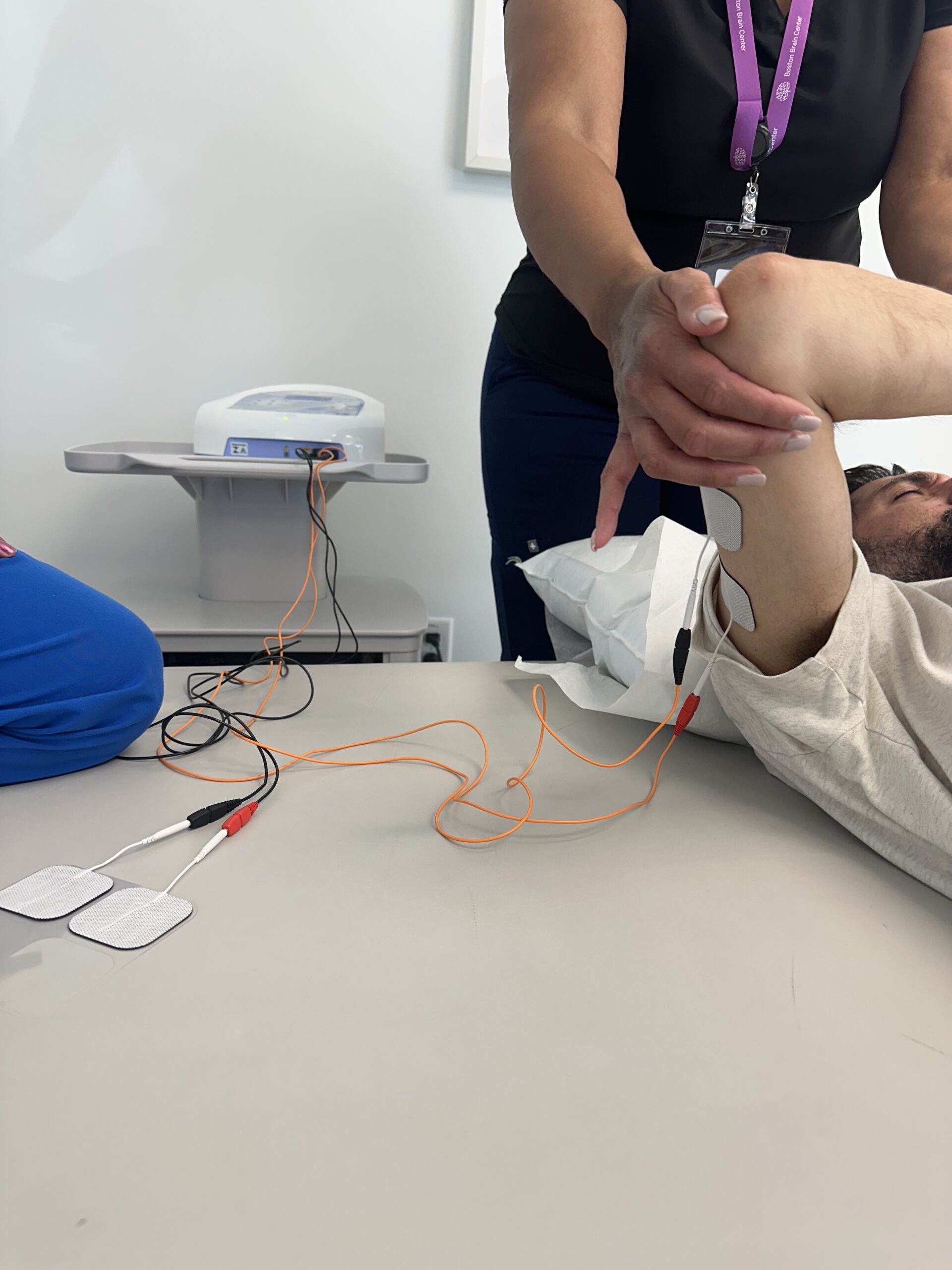
To understand its benefits, it is crucial to distinguish between the two primary ways muscle stimulation is used in clinical settings:Neuromuscular Electrical Stimulation (NMES): The application of electrical impulses directly to a muscle group according to a preprogrammed pattern. It is often delivered while the patient is at rest to counteract muscle wasting, maintain tissue health, and combat severe weakness. Functional Electrical Stimulation (FES): A more advanced method where the electrical current is superimposed onto functional tasks. For example, as a patient attempts to take a step, the device delivers a timed pulse to the tibialis anterior muscle to lift the foot, correcting a condition known as “foot drop”.
Core Clinical Benefits Proven by Experiments
Driving Neuroplasticity and Cortical Remapping
Historically, muscle stimulation was viewed as a passive, structural tool to prevent muscle wasting. However, rigorous clinical trials have demonstrated a profound central nervous system benefit: neuroplasticity. When an electrical impulse forces a paralyzed muscle to contract, it fires a massive cascade of
afferent sensory feedback signals back up the peripheral nerves to the brain.
The Breakthrough Up-LIFT Trial: A pivotal multicenter clinical trial evaluating non-invasive spinal and peripheral neuroprosthetics (such as the ONWARD ARCEX therapy) showed that structured stimulation significantly restores arm and hand functions in individuals with chronic tetraplegia. The sustained peripheral feedback forces the brain to reorganize its neural circuits, often allowing patients to retain long-term motor gains even when the electrical device is turned off.Restoring Activities of Daily Living (ADLs) Post-Stroke
Limb weakness or paralysis affects a vast majority of stroke survivors, directly limiting their independence.
The Evidence: A comprehensive systematic review and meta-analysis published in the Archives of Rehabilitation Research and Clinical Translation compiled data from multiple randomized controlled trials (RCTs). The researchers found that stroke patients who received NMES in addition to traditional physical therapy scored an average of 9 points higher on the 0-100 Barthel Index (the golden standard for measuring ADL independence) compared to those who received traditional therapy alone. The improvements were particularly pronounced in subacute stroke stages and upper-limb dexterity. Re-establishing Sensory-Motor Feedback Loops Coordinated movement requires a two-way street: the motor command going down, and the sensory positioning data (proprioception) coming back up.The Double-Array Experiment: A human clinical trial conducted by researchers at Brown University and Rhode Island Hospital utilized a cutting-edge approach for patients with complete spinal cord injuries. They placed electrode arrays both above and below the injury site. The array below drove muscle control in the legs, while the array above simulated sensory signals. For the first time, patients walking on a treadmill with the assistance of physical therapists could simultaneously move their limbs and consciously perceive where their legs were located in space. Reversing Muscle Atrophy and Enhancing Strength
When a limb is paralyzed, the rapid onset of disuse atrophy degrades muscle fibers and metabolic health. Muscle stimulation acts as a localized exercise simulator.
The Mechanism: By introducing higher frequencies (typically 20–50 Hz), the current achieves muscle tetany—a sustained, powerful contraction. Research indicates that regular sessions maintain muscle mass, increase localized blood circulation, enhance exercise capacity, and mitigate painful joint subluxation common in weak shoulders.
The Future: Systemic and Autonomic Recovery
The scope of muscle and neural stimulation has expanded far beyond simple movement. Active clinical trials, such as the global Empower BP study, are evaluating how epidural and electrical stimulators can regulate autonomic functions like orthostatic hypotension (dangerous blood pressure drops when sitting or standing) in spinal cord injury survivors.
By transforming passive muscles back into functional, active tissue, electrical stimulation effectively rewires the damaged human nervous system from the outside in.
Focus: Overcoming Stroke-Induced Foot Drop with Functional Electrical Stimulation (FES)
When a stroke disrupts the motor cortex, it frequently impairs the neural pathway leading to the tibialis anterior muscle in the lower leg. This results in foot drop an inability to dorsiflex (lift) the ankle during the swing phase of walking.
Without intervention, patients must dragging their toes or adopt compensatory mechanisms like “circumduction” (swinging the leg outward in a semi-circle), which dramatically increases the risk of falls and spikes energy expenditure.
The Mechanism of Action
To correct foot drop, clinicians deploy Functional Electrical Stimulation (FES) systems. Unlike stationary muscle pumps, these are gait-synchronized orthotic devices that use tilt sensors, accelerometers, or heel-switches to track the patient’s movement in real-time.
- Detection: The sensor identifies the precise moment the patient’s heel leaves the ground (the start of the swing phase).
- Stimulation: The device instantly sends a localized electrical current (typically 20–40 Hz) to the common peroneal nerve.
- Contraction: This nerve activation triggers the tibialis anterior muscle to contract, cleanly lifting the foot.
- Relaxation: As the heel strikes the ground again, the current ramps down, allowing a smooth, natural transition into the stance phase.
Thanks,
Boston Brain Center






No comment