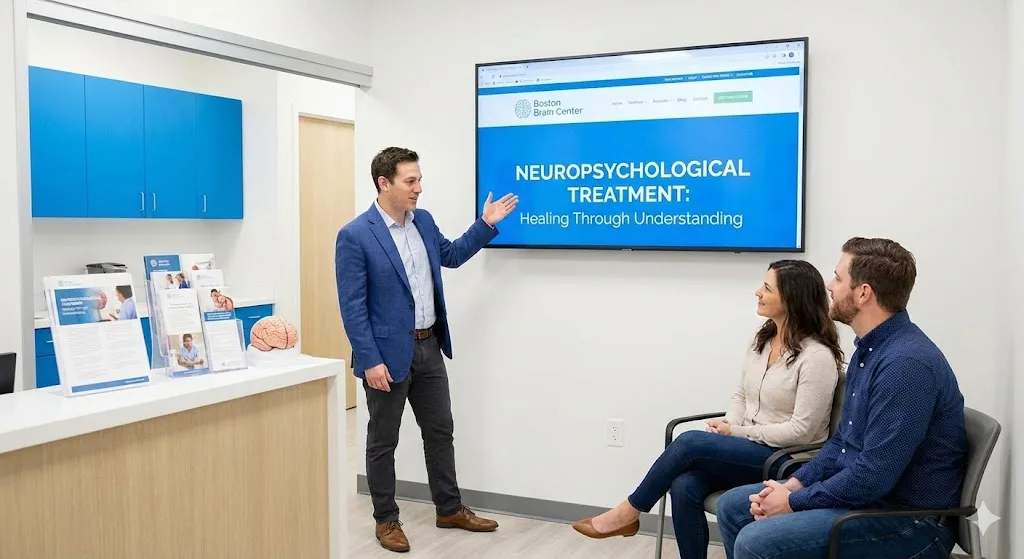
Understanding the Clinical Importance of Psychological and Neuropsychological Evaluation for Children, Adolescents And Adults
At the Boston Brain Center, we recognize that a clear understanding of cognitive and emotional functioning is the cornerstone of effective mental health care. A psychological evaluation is more than a series of tests; it is a rigorous, data-driven process designed to map the intricacies of the human mind.
1. Diagnostic Clarification and Precision
The most common motivation for an evaluation is to obtain or confirm a specific psychological diagnosis. Many symptoms—such as lack of focus, emotional volatility, or social withdrawal—can overlap across various conditions. A formal evaluation provides the differential diagnosis necessary to distinguish between:
-
Neurodevelopment Disorders: Such as ADHD or Autism Spectrum Disorder (ASD).
- Mood and Anxiety Disorders: Including Major Depressive Disorder, Bipolar Disorder, or Generalized Anxiety.
-
Personality Disorders: Identifying long-term patterns of behavior that may require specialized therapeutic approaches.
-
Learning Disabilities: Pinpointing specific deficits in reading (Dyslexia), writing (Dysgraphia), or mathematics (Dyscalculia).

Educational and Workplace Accommodations
For students and working professionals, a formal evaluation is often the “key” to accessing necessary support systems. Under the Americans with Disabilities Act (ADA) or the Individuals with Disabilities Education Act (IDEA), documentation from a clinical evaluation can secure:
-
Extended time on standardized tests (SAT, GRE, LSAT, etc.)
-
Modified work environments or specialized equipment.
-
Individualized Education Programs (IEPs) or 504 Plans for school-aged children.
At the Boston Brain Center, our intake process is designed to create a “Cognitive Fingerprint”—a detailed map of your brain’s unique performance patterns. During a comprehensive neuropsychological evaluation, we assess several distinct “domains” of function.
Understanding these domains helps us pinpoint whether a challenge is rooted in a specific neurological pathway or a broader psychological factor.
Clinical Insight: A psychological evaluation does not merely label a condition; it identifies a person’s unique “cognitive signature”—the specific profile of strengths and weaknesses that defines how they interact with the world.

Cognitive Health and Geriatric Assessment
As we age, distinguishing between “normal” forgetfulness and the early stages of cognitive decline is vital. For elderly individuals, evaluations serve as a critical tool for:
-
Early Detection: Identifying Mild Cognitive Impairment (MCI) before it progresses.
-
Dementia Profiling: Assisting in the diagnosis of Alzheimer’s disease, Vascular Dementia, or Frontotemporal Dementia.
-
Baseline Testing: Establishing a current level of functioning to monitor changes over time.
A “one-size-fits-all” approach rarely works in behavioral health. The results of an evaluation provide a roadmap for your medical team:
-
Therapeutic Tailoring: Guiding therapists to focus on specific cognitive-behavioral gaps or emotional regulation skills.
Why do people get one?
It’s often used as a diagnostic tool when “brain fog” or memory slips become more than just a nuisance. Common reasons include:
-
Identifying the early stages of Alzheimer’s or Dementia.
-
Assessing the impact of a Concussion, or Traumatic Brain Injury (TBI).
-
Understanding learning disabilities or ADHD in adults and children.
-
Baseline testing before and after major surgeries.

Our Philosophy: Where Clinical Excellence Meets Human Compassion
At the Boston Brain Center, we understand that a neuropsychological evaluation is often the first step in a deeply personal journey toward clarity. We believe that top-tier diagnostic science is most effective when delivered within a framework of genuine empathy and support.