Life After a Stroke: Why Neuropsychological Treatment is Your Most Critical Next Step.
Surviving a stroke is a monumental victory, but for many, the “hidden” challenges that follow can feel even more daunting than the physical recovery. While physical and occupational therapy focus on regaining movement and daily functions, neuropsychological treatment addresses the profound changes in how your brain processes thought, emotion, and behavior. At the Boston Brain Center, we believe that true healing begins with understanding. Recovering from a stroke isn’t just about moving your limbs; it’s about reclaiming your mind.
Understanding the “Hidden” Effects of Stroke A stroke often leaves behind invisible scars. Even when a survivor looks “fine” on the outside, they may be struggling with:
-
Cognitive Fog: Difficulty with memory, attention, or “executive functions” like planning and problem-solving.
-
Aphasia & Communication: Challenges in finding the right words or understanding complex conversations.
-
Emotional Volatility: Sudden shifts in mood, depression, anxiety, or a condition called pseudobulbar affect (uncontrollable laughing or crying).
-
Personality Changes: Family members may notice their loved one seems “different”—perhaps more impulsive or less motivated than before.
-
How Neuropsychological Treatment Bridges the Gap
Neuropsychological treatment is the specialized bridge between medical neurology and behavioral health. Here is why it is vital for long-term recovery:
1. Pinpointing the Damage through Evaluation
Every stroke is unique. A comprehensive evaluation identifies exactly which cognitive circuits have been disrupted. This creates a “road map” for your specific recovery, ensuring you aren’t wasting energy on generic exercises that don’t target your needs.
2. Cognitive Rehabilitation
This is the “gym” for your brain. We use evidence-based techniques to help the brain reorganize itself—a process known as neuroplasticity. Through targeted exercises, patients can learn to compensate for lost functions or even regain mental sharpness.
3. Managing the Emotional “New Normal”
The psychological toll of a stroke is immense. Therapy provides a space to process the grief of lost abilities and learn coping mechanisms for the frustration and anxiety that often accompany the recovery journey.
4. Supporting the Family Unit
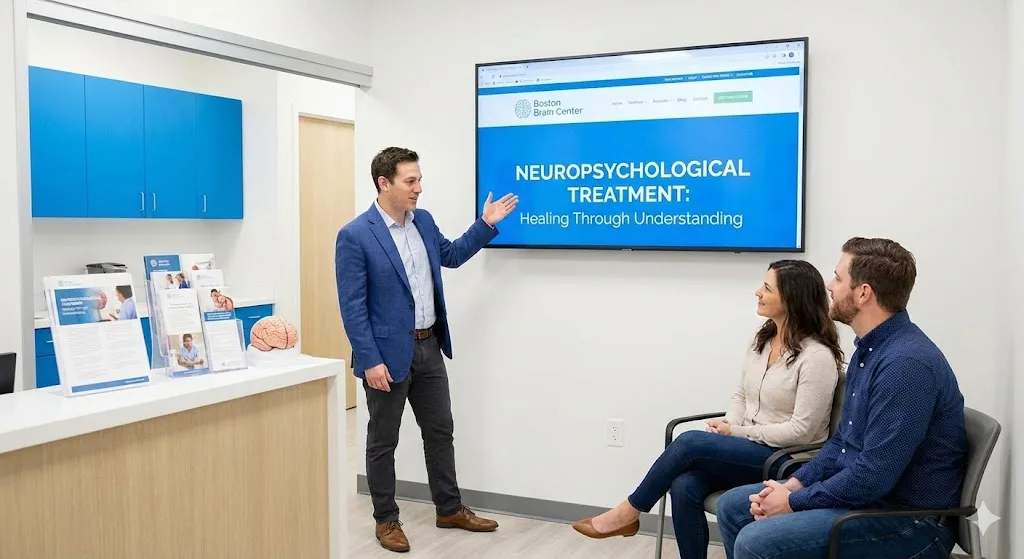
As seen in our consultation sessions, stroke recovery is a family affair. Neuropsychologists educate families on how to support their loved ones without becoming overwhelmed, helping to rebuild relationships that may be strained by the patient’s behavioral changes.
Healing Through Understanding
The path to recovery is rarely a straight line. However, with the right neuropsychological support, it is possible to move beyond survival and back toward a life of meaning and engagement. By treating the whole person—mind and body—we help survivors at the Boston Brain Center navigate their “new normal” with confidence.


No comment